
Industry Insights
Power Purchase Agreement vs. Energy Service Agreement: What's the Difference?
CIPA Communications ·
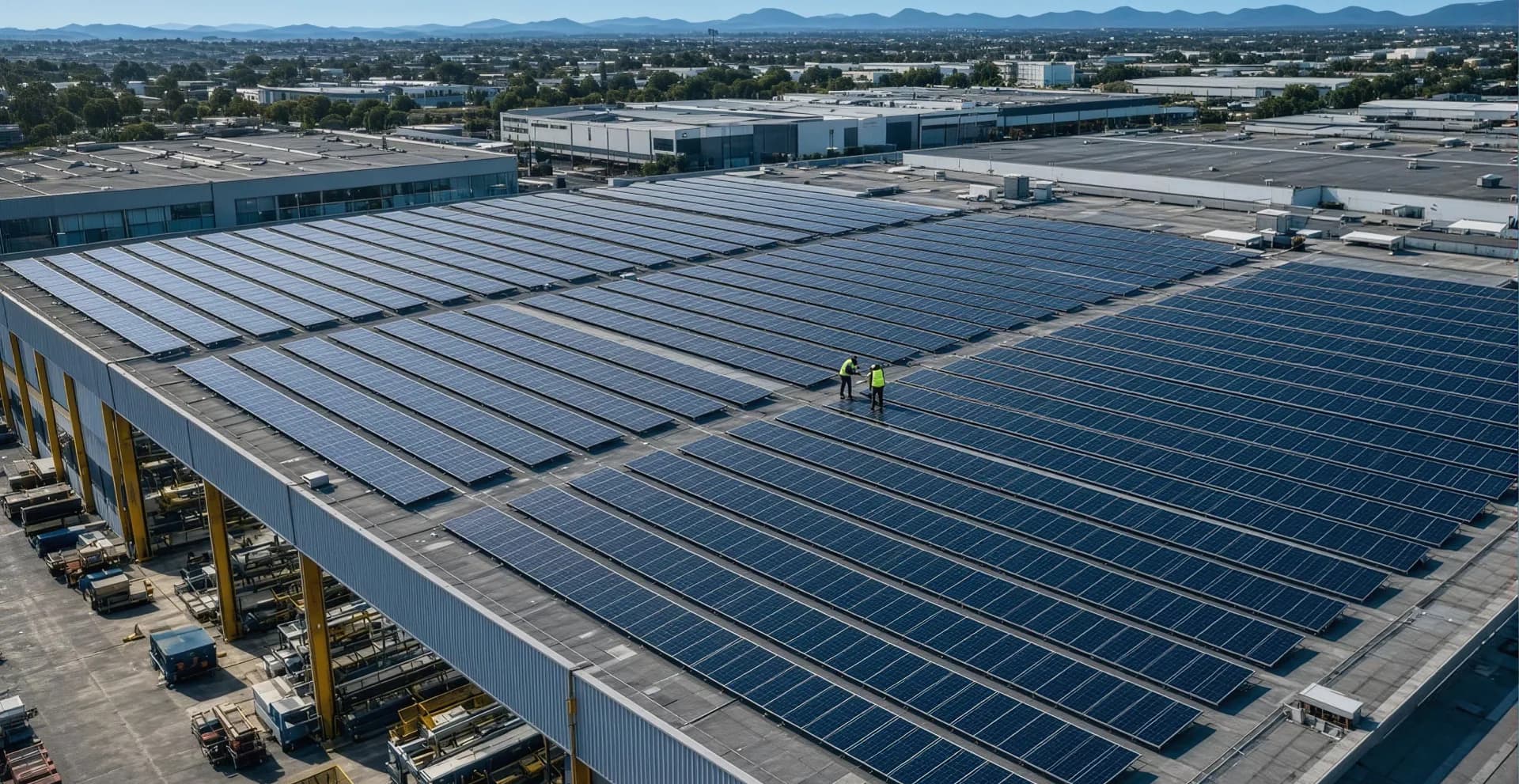
If you've spent any time researching commercial solar or clean energy financing in Ghana, you've probably come across both terms: Power Purchase Agreement (PPA) and Energy Service Agreement (ESA). They sound similar, and in practice they're closely related, but they're typically used for different scales of project and carry different terms.
Energy Service Agreements: the C&I standard
An Energy Service Agreement is the contract structure typically used for commercial and industrial rooftop or on-site solar, where a provider like CIPA Energy Resources finances, builds, owns, and operates the system, and the client pays a fixed monthly tariff for the energy consumed. An ESA defines the tariff, the escalation rate, performance obligations, insurance responsibilities, termination provisions, and end-of-term ownership options. It's built to be bankable and structured to meet DFI and lender requirements, but the terms are sized for a single facility or a small portfolio.
Power Purchase Agreements: the industrial and utility standard
A Power Purchase Agreement is the contract structure more commonly used at industrial and utility scale, where capacity, tenor, and off-take terms are larger and more complex. Industrial PPAs often include take-or-pay provisions on qualifying volumes, capacity payment structures, and detailed curtailment and grid interaction terms. Contract lengths at this scale commonly run 15 to 25 years. This is the structure used for large manufacturing facilities, free zone and industrial park developments, and utility-scale solar programmes.
Which one applies to you
In practice, the difference usually comes down to scale. If you're a single business or facility looking to reduce your energy costs, an ESA is almost always the right fit: simpler, faster to execute, and sized appropriately for your consumption. If you're a large industrial site, a free zone enterprise, or part of a multi-tenant development, a PPA structure may apply instead, particularly for systems above 1MWp.
Either way, the underlying principle is the same: you're not buying equipment, you're buying energy, under a contract that fixes your cost and defines exactly what happens at every stage, from commissioning to end of term.