
Industry Insights
West Africa's Clean Energy Investment Landscape: A 2026 Outlook
CIPA Communications ·
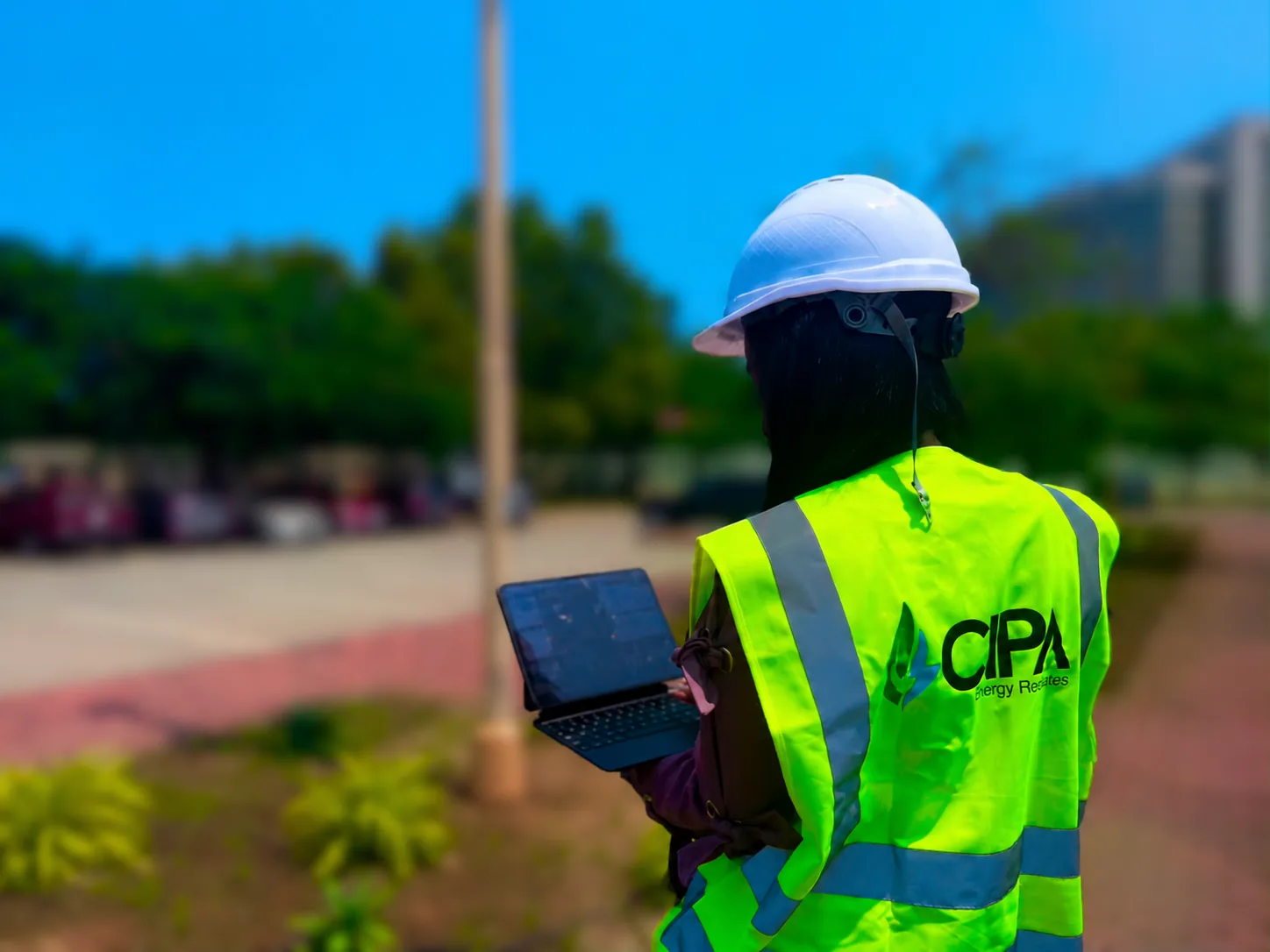
West Africa's clean energy sector sits at an interesting point. Grid reliability challenges that have long driven commercial and industrial energy users toward diesel are, at the same time, creating one of the clearest commercial cases anywhere in the world for distributed solar and storage. The businesses paying the most for unreliable power are precisely the ones with the strongest incentive, and often the balance sheet, to switch.
Why the region's structural challenges are also its opportunity
Unreliable grid supply, high diesel dependency, and currency volatility are usually framed as risks for investors in African infrastructure, and they are real risks. But for a developer-plus-financing model built around long-term, contracted cash flows in local currency, denominated against a client's real energy costs rather than a subsidy or feed-in tariff, those same structural conditions are what make the underlying economics work. A business paying GHS 1.80 to 2.20 per kWh in blended grid and diesel costs today doesn't need a policy incentive to make solar attractive. It needs a financing structure that removes the capital barrier.
The role of blended and DFI-aligned capital
Institutional capital, from development finance institutions, pension funds, and green bond structures, plays an increasingly central role in scaling this kind of platform beyond what internally generated cash flow alone could support. Structures aligned with IFC Performance Standards, backstopped risk vehicles, and SPV-isolated asset structures exist precisely to make contracted West African energy infrastructure investable at institutional scale, while keeping individual project risk appropriately ring-fenced.
Where the next phase of growth is likely to come from
Ghana remains the clearest near-term opportunity: a large, underserved commercial and industrial base, a defined regulatory framework under the Energy Commission Act and the Renewable Energy Act, and a track record of projects moving from feasibility to commercial operation. The next phase of regional growth points toward Francophone West Africa, including Mali, Burkina Faso, and Senegal, markets that share many of the same structural drivers, high diesel dependency, growing industrial demand, and constrained grid capacity, but remain comparatively underserved by developer-plus-financing platforms of the kind now established in Ghana.
What this means for developers and capital partners
For project developers and EPC contractors with a qualified pipeline and a credible off-taker, the opportunity is a financing and co-development partner that brings equity, climate finance, and investment structuring, without requiring the developer to carry that capital themselves. For capital partners, it's a contracted, SPV-isolated entry point into an asset class where the demand signal, businesses actively seeking to escape diesel costs, is about as clear as infrastructure investing gets.
The platforms that scale fastest across this region over the next several years will likely be the ones that combine local delivery capability with institutional-grade financing structure. That combination is still rare, which is precisely what makes it worth building now.